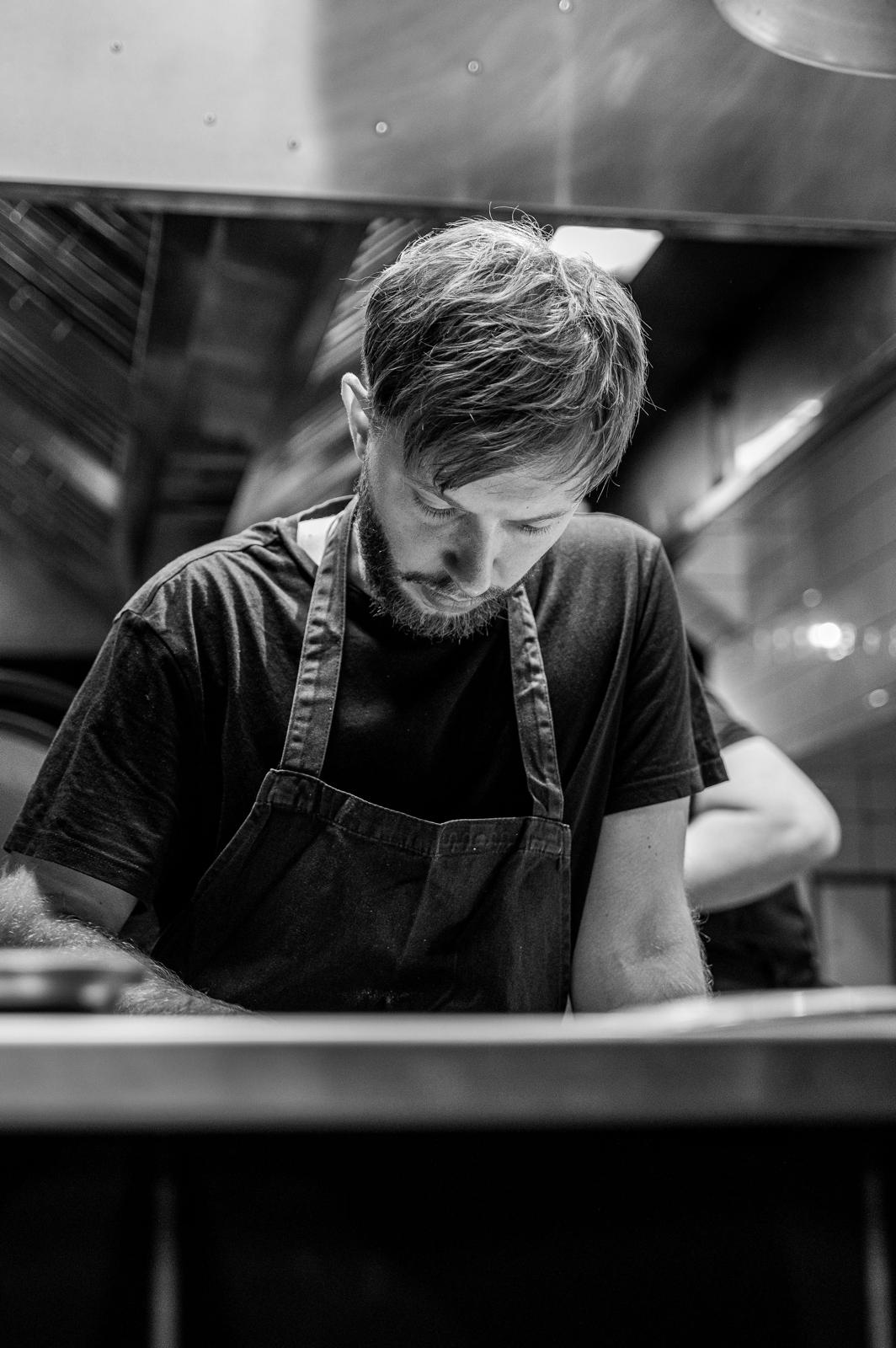
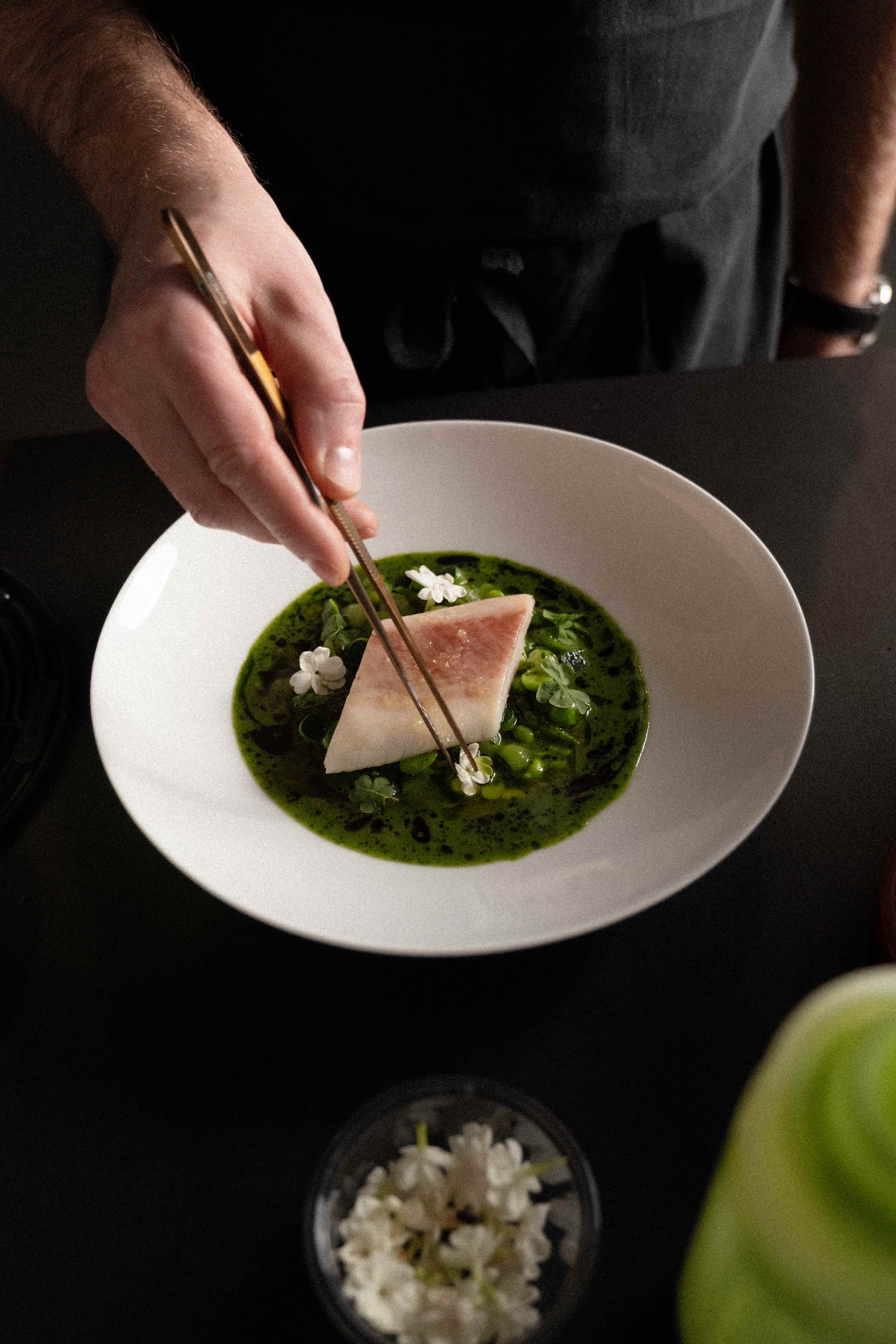
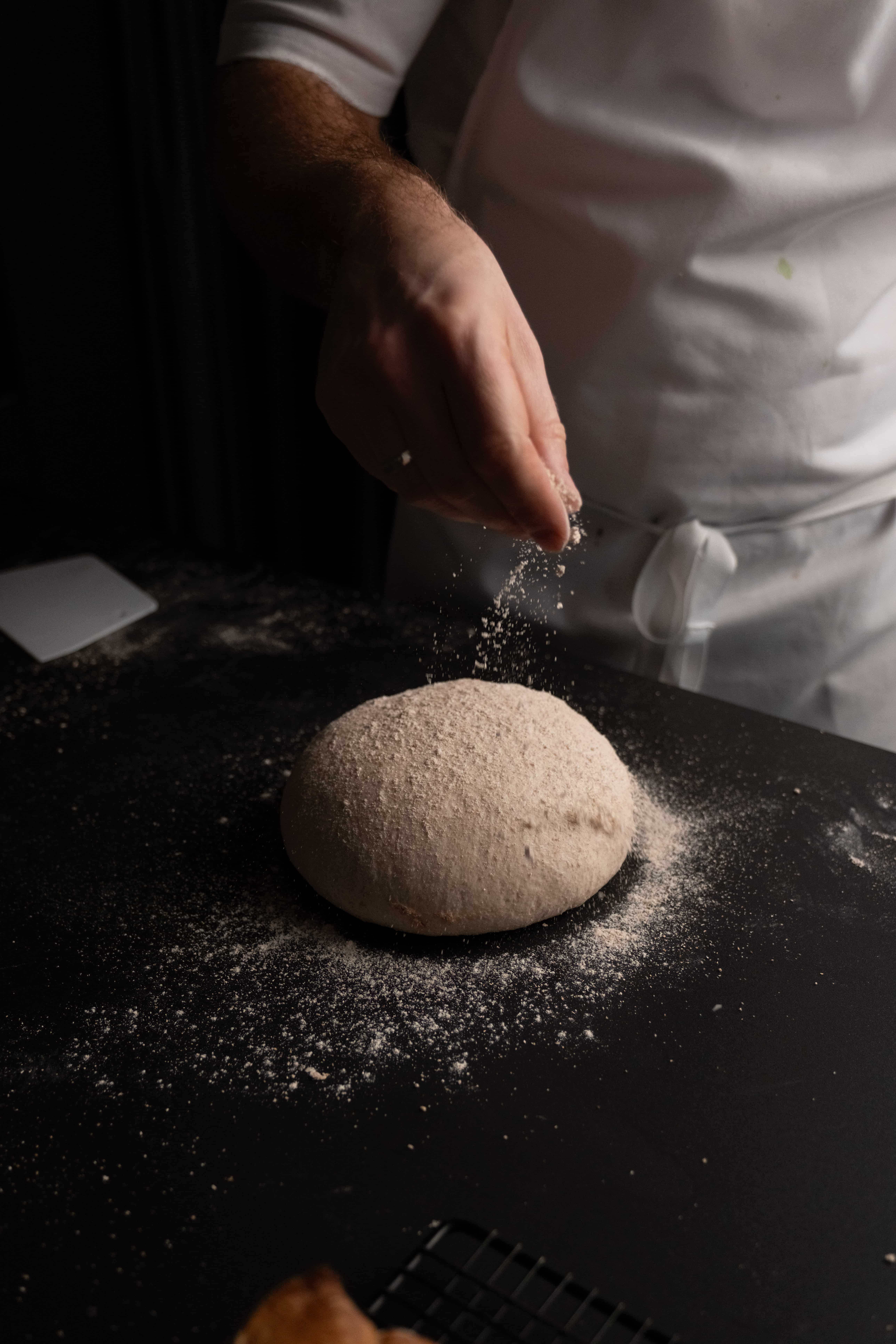
Meet Marius, our Executive Chef, and the person who wants to know exactly who'll be at your table before he plans a single dish: who you're travelling with, what you love to eat, how adventurous you are, who around the table has something to celebrate.
Michelin-trained, he led the menu at The Wilderness during the year it earned its star. What drew him to chalets afterwards was the chance to truly understand the people he cooks for.
Your menu starts with a conversation between you and Marius in the weeks leading up to your arrival, and from there, he leads his team to bring it to life.
After Michelin-starred kitchens, I wanted to take everything I'd learned and put it into a completely different environment. The pull toward chalets came from a need for intimacy: in a restaurant you might cook for hundreds of guests over a service, but in a private chalet you start to properly understand the people you're cooking for. You see what they enjoy and adapt in real time, and there's a much closer connection between chef and guest. Then there's the mountains: working at altitude gives you a different relationship with food and ingredients entirely; you're never far from exceptional produce, alpine traditions, and the landscape itself. For me it wasn't stepping away from Michelin. It was taking that discipline and creativity somewhere I could have far more ownership over it.
By the time guests sit down, we already know far more than names and allergies. We want to know who they are, where they're from, their ages, favourite foods, dislikes, how adventurous they are, what the group dynamic is: a family with young children, friends who want long relaxed dinners, a couple celebrating an occasion. That changes everything. The food becomes a conversation with the guests rather than a fixed script.
The biggest difference is I can cook for the person, not the table. In a restaurant, the menu and service largely dictate the experience. In a private chalet, I respond in real time: to the guest's appetite, the weather, what they did that day, what they loved the night before.
Dashi is probably the closest for me, though Marmite itself is a good example too. It's humble, intensely savoury, umami. It represents a whole philosophy of cooking: restraint, seasonality, respect for the ingredient, and extracting the maximum flavour without making the dish feel heavy.
Absolutely. The food shouldn't compete with the mountains, it should taste like it belongs there. I look at it through a kind of map: cold brings acidity, the purity and minerality of snow. Forest brings resin, pine, smoke, mushroom. Mountain pastures bring hay, herbs, dairy. Winter brings preservation and fermentation. And Valais itself brings the regional ingredients: apricots, walnuts, cheese, wine, rye. It's vital for food to correspond with its environment. That's where refinement and restraint can take place, and where a sense of magic still endures.
For me it's about contrast: when one makes you understand the other more clearly. You taste them together and suddenly neither feels complete without the other. I also ask whether the combination tells me anything about the place or the season. In the Alps, apricot and alpine herbs make sense: there's a natural relationship between the produce and the environment. Raclette and something sharp works because the acidity gives the cheese somewhere to go. Spruce and cream can work because the forest character cuts through the richness. Sometimes I simply know, because I've stopped thinking about the ingredients separately.
It's really the accumulation of experience: learning, honing skills, constantly questioning and testing where the boundaries sit. A few people I'd credit for that meticulous need to question and inspire: Gerd Greaves, Nick Sinclair, Michael Wignall, Alex Claridge. They've shaped how I understand the industry as a whole.
Anything that could be served identically elsewhere. The food should capture exactly where you are, not temporarily transport you somewhere else.
It's the same thinking behind every dinner in an Armadillo chalet, whether Marius is building your week's menu with you in the weeks leading up to when you've landed, or a private chef is added through the À La Carte menu for a single evening. If you'd like to see how it fits into the rest of your stay, our hospitality page runs through what's included, from Hosted to self-catered.
Discover Catered Hospitality
Discover À La Carte
Written by Emelia Risi, Creative Marketing at Armadillo Chalets, in conversation with Marius, Executive Chef.